
Service Production Notes from an Albanian Shoot
Reflections on trust, place, and what really carries a production
This project came to me through a collaboration that had nothing to do with scale or budget. A few months earlier, we had co-produced a short film about Albania’s sworn virgins together with Peoplegrapher. It was a small, passion-driven project, and instead of charging, we chose to invest directly in it. We believed in the idea, the director, and the story. That collaboration turned out to be genuinely rewarding, and four months later, in March, they came back to us with another project, this time as a service production.
By the time it landed on my desk, a few things were already decided. The director was attached, and they were clear they wanted to work with us again. That kind of trust doesn’t happen often, and it immediately sets the tone. This wasn’t going to be a transactional service job. It required involvement, care, and a shared sense of responsibility.

When it became clear this needed more than execution
I realised very early on that this project would need more than standard execution. That moment came when I looked up the director who was attached. The producer had mentioned that the director was taking the job partly as a favour, the budget wasn’t extravagant, and the concept itself was ambitious. It was built around three real people, not trained actors. That changes everything. When you’re working with non-actors, the margin for chaos is smaller, and the need for clarity is much bigger.
What became clear to me is that when filming in Albania with a foreign director, early alignment is essential. It’s important to really understand what the director envisions and why certain creative decisions matter to the film. Even when you’re “just” servicing a project alongside a visiting production company, being actively involved in those conversations, asking the right questions, understanding priorities and clarifying what is truly crucial can make a decisive difference to the outcome.
Sometimes creative choices are made simply because certain tools or workflows are standard in a director’s home country, without considering what it actually takes to source or replicate them elsewhere. That’s where clear communication becomes key. Often, strong alternatives exist, and in some cases they can even lead to more inventive or appropriate solutions for the project. But if those conversations don’t happen early, energy can be spent chasing things that don’t serve the film. Alignment saves time, focus, and ultimately strengthens the work.
Working with people, not just departments
On this project, relationships mattered more than any checklist. The relationship between us and the visiting production company was crucial. Equally important was the trust between myself and my leading producer. That internal trust is what allows you to make fast decisions without second-guessing each other.
One thing I noticed and learned from is that sometimes people try to solve problems before communicating them to me. It usually comes from a good place: dedication, ownership, the desire to protect the project. But I realised again how important it is that I’m informed early. It’s up to me to decide whether a problem is something we can solve internally or something that needs to be flagged to the production company. When issues aren’t communicated, they don’t disappear, they tend to grow. This job reinforced how essential open communication really is, and how much I need to encourage it continuously.
There was also quiet responsibility carried by people who will never be credited for it. One example stands out. We were working with turtles, a sensitive subject, especially with a brand as prominent as ASUS. The sea turtles we were initially promised by an aquatic institute near Durrës fell ill and couldn’t be used. We sourced land turtles instead and communicated that they needed to be filmed closer to land. In the rush of production, that information got partially lost. Later, in post-production, the producer on the visiting production side carried the weight of clarifying this to the client and agency. He solved it quietly, effectively, and without drama. It was a seemingly small adjustment that became a big responsibility. One of those moments that never shows up on screen.
Albania as a working environment, not a backdrop
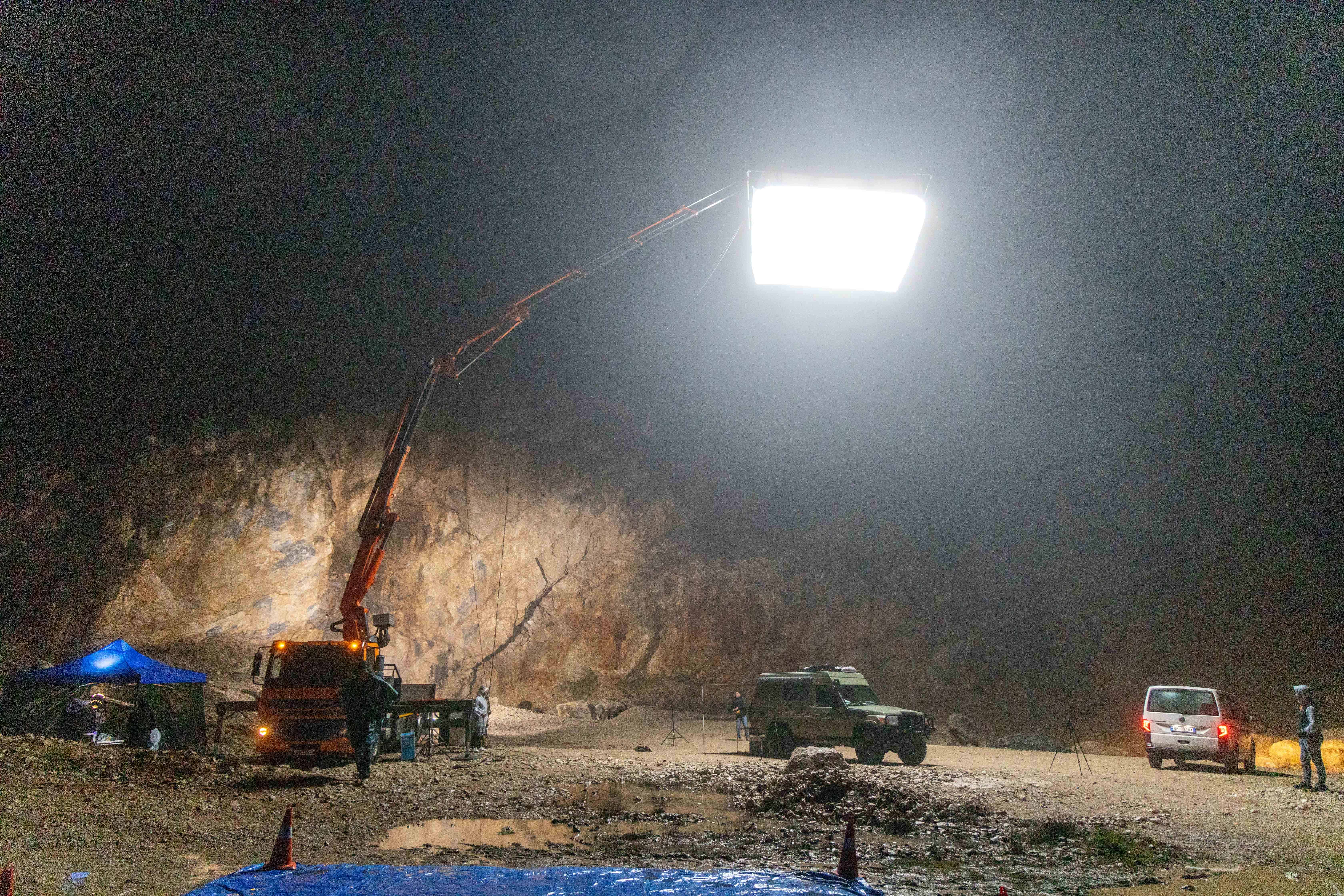
Albania shaped how we worked, not just what the film looked like. We expect sun almost year-round, but one of our shoot days brought heavy rain. We were filming exterior scenes in a quarry, and within minutes the entire crew was soaked and caked in mud. Shelter meant a ten-minute walk through the rain to a small, rudimentary hunter’s lodge, where we huddled around a fire-powered stove to warm up between takes.
In a moment of well-intentioned generosity, my jacket was placed a little too close to the stove to dry. The result was immediate and memorable: I spent the rest of the day running around set leaving faint trails of down behind me, like a very damp, slightly unhinged duck. The situation was thankfully resolved the next day, when our location manager who had been responsible for “helping” the jacket warm up, showed up with it carefully fixed. A small detail, but one that perfectly captures how these days unfold: chaotic, human, and held together by people who genuinely care.
The rain slowed us down but it also changed the atmosphere of the film. The rain created a gloomier, heavier mood, and the director and DOP adapted beautifully. Night lighting became more pronounced, and the images gained depth. The location forced us to recalibrate, and in doing so, it gave something back creatively. As a service production company, it’s also crucial to stay constantly aware of cost implications on the ground. Decisions that may seem small in the moment can have a real impact on the budget. On this shoot, despite the heavy rain, the decision was made to keep going. That choice immediately triggered a chain of unplanned needs: large quantities of raincoats, umbrellas, additional weather protection for equipment, and inevitably, some damage along the way.
Light rain had been anticipated. A full-blown storm hadn’t. The idea wasn’t written for rain, and under different circumstances, many productions would have called a weather day. In this case, we chose to push through. As a service company, we absorbed those additional costs, but it served as a clear reminder of how quickly expenditure can shift once conditions change. Understanding the financial consequences of creative and logistical decisions — even seemingly minor ones — is essential. It’s not about saying no; it’s about being fully aware of what each decision sets in motion.
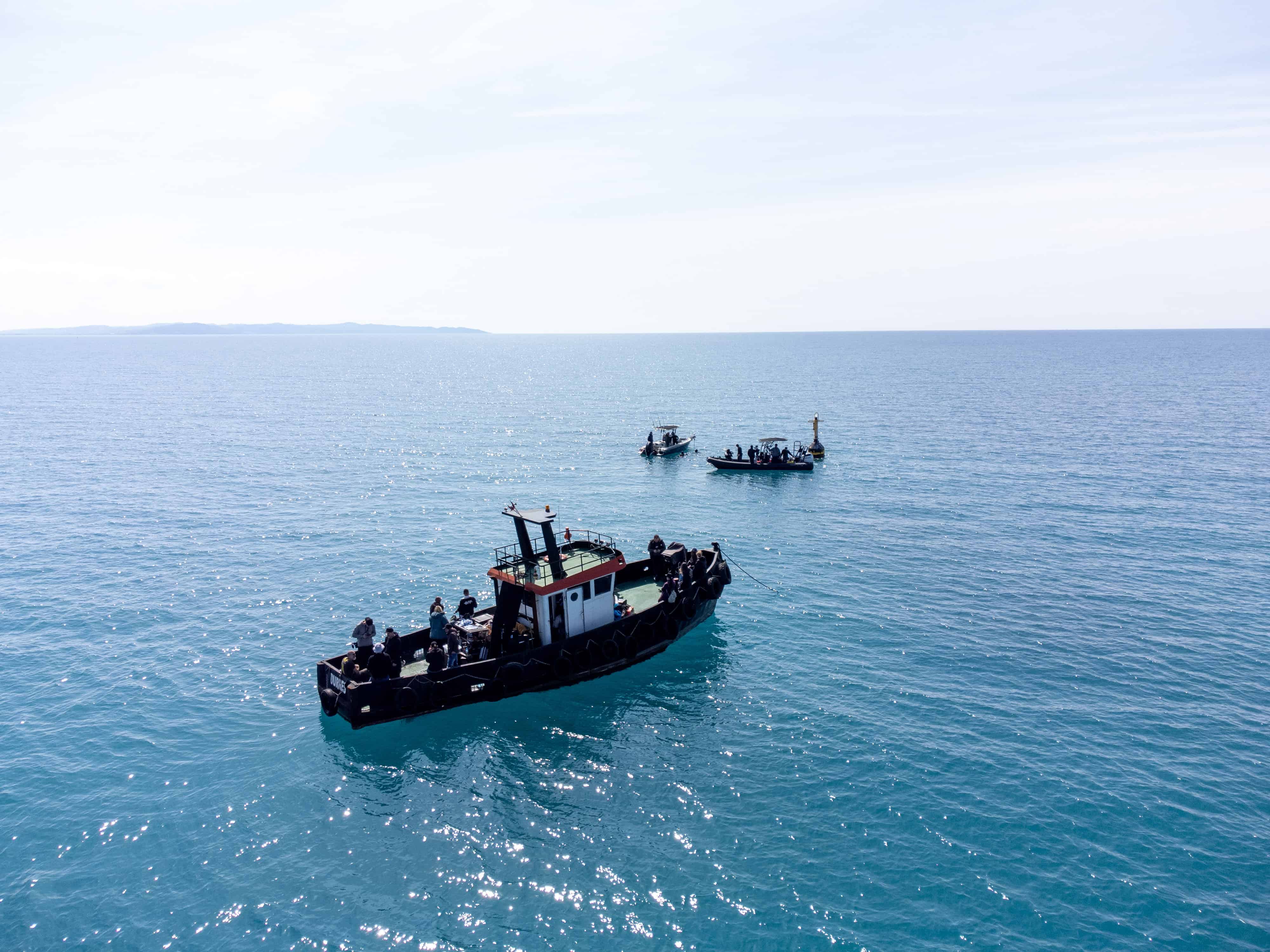
Other locations demanded constant attention. We shot in the quarry, on a boat in an active harbour, inside an operational hotel that shut down for us, the mountains and on the beach. Shooting on water came with its own complexity: health and safety, a large crew boat, smaller dinghies for essential crew, a prop boat for filming, and divers underwater. Visibility mattered enormously. If the water was too cold, particles reduced clarity; if it was too rough, shots became impossible. Every decision had to account for conditions that could change quickly.
Even permits weren’t always enough. At one point, the only place our rented boat could stop turned out to be privately owned. The owner arrived angry. After a conversation and an invitation to lunch, everything was resolved. We couldn’t return to shore, so even basic logistics like bathroom breaks had to be planned meticulously. Communication had to be pristine for the locations to work at all.
Albania being a small country has its advantages. Everyone knows everyone, and when something goes wrong, people genuinely try to help solve it. At the same time, that smallness means specialists aren’t always readily available. It reinforced something I already knew: in Albania, everything comes down to pre-production. Planning, and then planning again.
Moments that redirected the course
One key moment came in pre-production. We were shooting a night scene in the mountains at Bovilla Lake: breathtaking, remote, and completely unforgiving when it comes to light. Our DOP, Matthias Pennaccio, pushed hard for a specific lighting mat. At first, it felt like something we could work around. Sourcing it overnight in Albania seemed unrealistic.
In the end, he was right. We brought it in from Bulgaria with the help of suppliers who understood the urgency and border logistics. It arrived the night before the shoot. What felt like a small insistence turned out to have a disproportionate impact on the final images. The night scenes simply wouldn’t have worked without it.
What stayed with me
This project stayed with me for deeply personal reasons. I remember running through rain and mud with my four-month-old baby strapped to me in a sling, jumping out of vans when he fell asleep so I could be present on set and help solve issues. It made me confront what it means to be a solo, self-employed mother in this industry. There are no guarantees. If you stop, the work doesn’t wait.
That experience stayed with me long after the shoot wrapped. It became a broader societal question I’ve been thinking about for nearly three years now: how we support self-employed parents, especially solo mothers, in industries that demand everything from you.
Another thing that stayed with me was the dedication of my producer, Blerta. I’ve rarely encountered someone so relentlessly solution-oriented, so committed to making things work even when conditions are harsh and sleep is minimal. That level of dedication is not something you can teach and it’s something I don’t take for granted.
What this reaffirmed — and what comes next
This project reaffirmed how I like to work. I need teams to listen fully before jumping into solutions. I need problems to be communicated early. No question is stupid. Some problems that feel huge to a production manager are small to me because I see the entire picture, budget, client, and long-term impact. But problems that aren’t communicated can grow quickly. I realised I need to reinforce this culture again, more actively.
Looking ahead, I want projects where service production is treated as a true partnership — where our resources and knowledge are used fully and respectfully. I want to keep shooting challenging, human-centred stories. Albania in spring or summer remains one of my favourite places to work: beach, mountains, urban locations, all within short distances.
Most of all, I want projects with emotional weight, performances that engage, stories that matter, and ideally, work that leaves something behind beyond the shoot itself.
Written by, Nikita Leibovici, Executive producer Caravan