
Service Production Notes from a Domino’s Shoot in Albania
Reflections from the ground
This was an extremely fast-paced service production in Albania, and it began in a slightly surreal way. I was eight months pregnant and in Tuscany, trying to take a short break, when the request came in. The original plan for the Domino’s Pizza commercial shoot had been Tenerife, but a severe storm had made that impossible. Through a chain of referrals, involving a Ukrainian service production company navigating the early days of the war and a UK-based production company: the project landed on our desk.
The brief was simple but urgent: could Albania replace Tenerife, and could we move quickly enough to make it work?
Despite the circumstances, we decided to engage immediately. Together with my producers, we started drafting budgets and pulling together a location deck based on beaches we already knew. From the outset, transparency was crucial. This wasn’t a classic setup: It was clear that if this was going to work, all layers needed to stay aligned. We needed to join forces properly. Once the numbers and locations were shared, interest became concrete, and the project moved fast.
Finding the right beach
Creatively, the location requirement was clear: a crystal-clear beach. Initially, we leaned toward northern Albania, simply because access was easier and logistics more familiar. But the client was drawn to the southern coastline, the beaches often referred to as the “Maldives of Europe.” Once that direction was confirmed, we sent scouts south to find the right spot.
The chosen beach was remote, stunning, and exactly what the film needed. At the time, access required careful planning: long drives, early call times, and tight coordination. Today, that same region is on the verge of becoming far more accessible, with a new airport opening nearby, which will significantly change how productions can approach the south in the future.
Despite the remoteness, the beach worked remarkably well. There was only one small bar operating nearby, and the owner turned out to be an unexpected ally. He was supportive, helpful, and genuinely curious about what we were doing. That kind of local goodwill made a big difference. It gave us a base, a point of contact, and a sense that the production was welcome.

Permitting and local cooperation
Because of the location and the timeline, permitting had to start immediately. My producer went straight to meet the local mayor to explain the project and align expectations. Once it was clear that this was an international production with positive economic impact, the response was overwhelmingly supportive.
This is something I’ve experienced repeatedly when filming in Albania: when people understand the purpose of a project and see its value, they tend to rally behind it. With the local authorities on board, permits came through quickly, and we were able to move forward without delays. That early alignment was essential: without it, the schedule simply wouldn’t have held.
Crew dynamics on a remote set
The crew on this production reflected how international film sets often look today. We had people from Ukraine, the UK, Germany, Macedonia, Albania, Bulgaria. All working together on a remote beach, in the heat, under time pressure.
Overall, the atmosphere was professional and focused. The art departments, in particular, clicked immediately. The visiting art director worked closely with our local counterpart, and the collaboration felt natural from the onset.
There was some initial friction between the first ADs, one coming from abroad, one local. It wasn’t personal; it was a clash of working styles, pace, and assumptions. But once both sides aligned around a shared goal, that tension eased. What mattered most was that everyone understood they were working toward the same outcome: a smooth shoot and a strong film.
The conditions weren’t easy. The beach was remote, the sun was relentless, and resources had to be managed carefully. But across departments, people showed up with professionalism and a willingness to adapt. The diversity on set didn’t slow things down, it added depth to the collaboration.

Equipment and practical execution
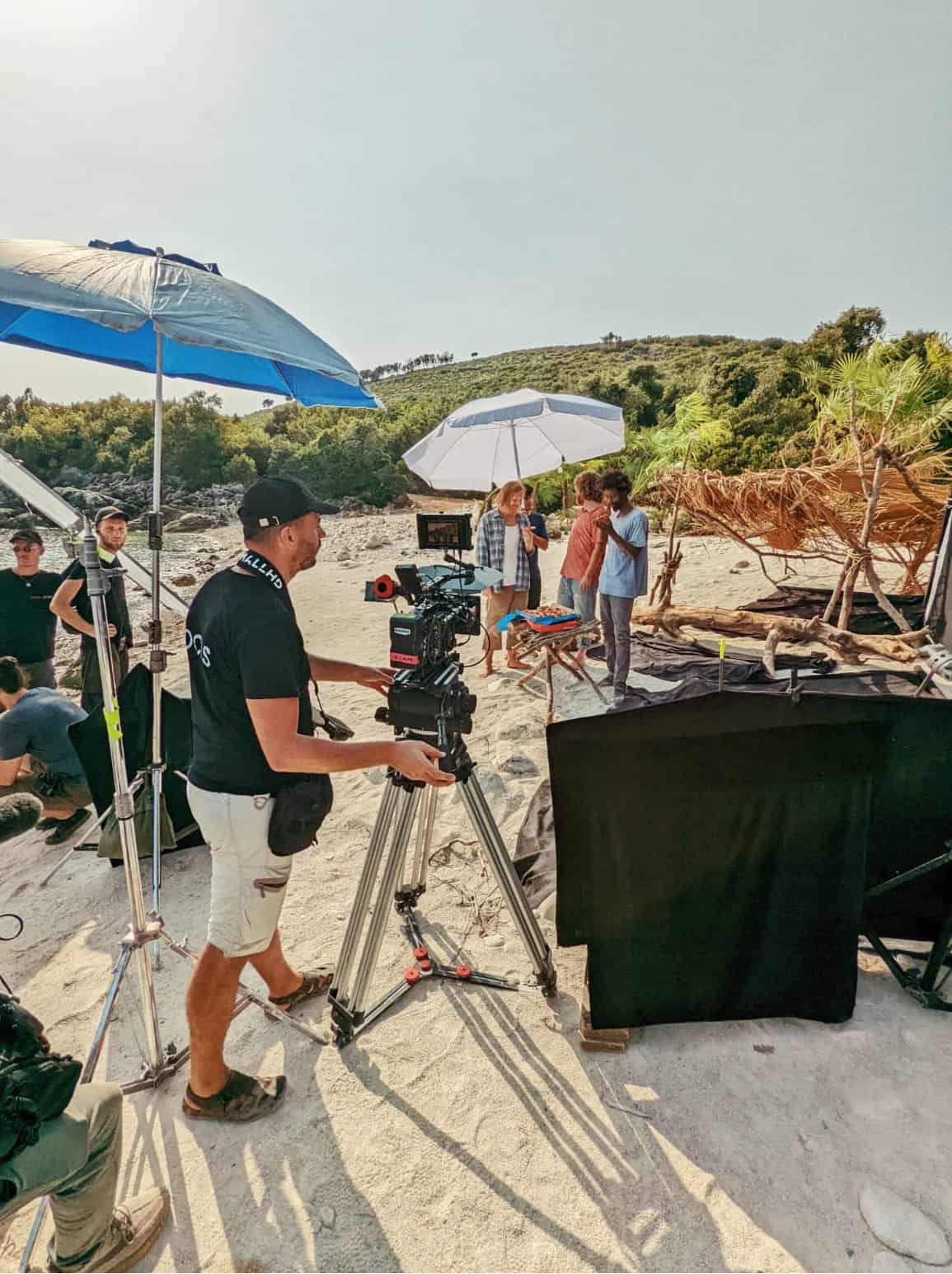
All equipment for the shoot was sourced locally. We worked with an Arri Alexa and kept lighting minimal, relying mostly on natural daylight. Because several shots were planned on the water, having a highly experienced local grip was crucial. Stability on a boat isn’t something you improvise, and that expertise made the difference. And this grip has now been joining us on our journey of producing in Albania for 4 years and counting.
We used a dolly where needed to achieve controlled movement, and a drone was brought in for social media assets. Since the beach was fully secured and permitted, drone operation didn’t pose any issues. Nothing about the setup was extravagant, but everything was thought through carefully. The simplicity worked in our favor.
We had anticipated bystanders. It was high season, and we were shooting on one of the most pristine natural beaches in the south of Albania. A crew of nearly 100 people inevitably drew attention. What we hadn’t anticipated was the determination of some spectators, swimming from one cove to another just to watch the shoot from the water. Albanian stubbornness can be a real asset in production, especially when solving problems. It’s slightly less helpful when you’re trying to politely clear a frame. It caused small delays, but nothing we couldn’t manage.
Time pressure where it hurt most
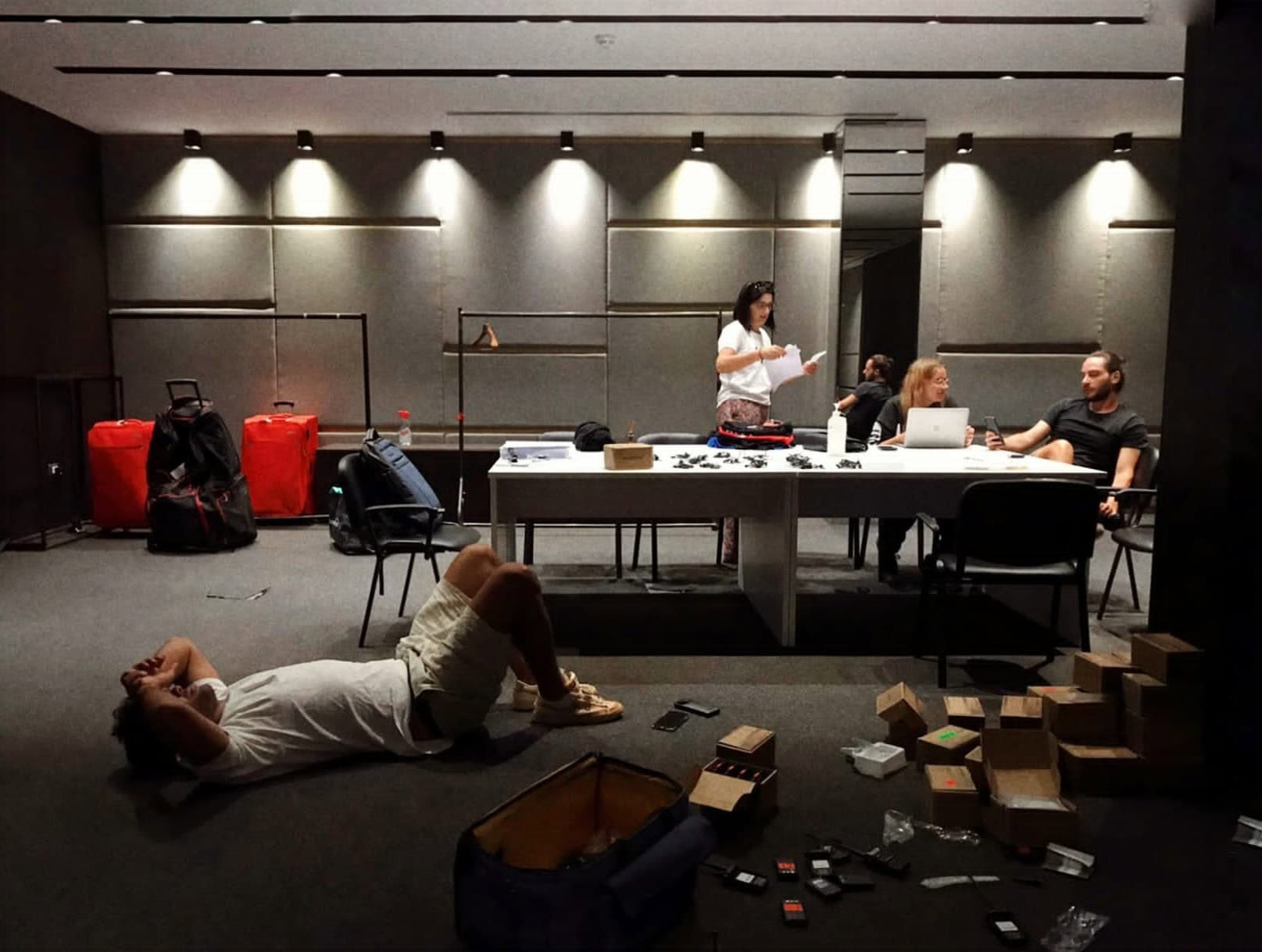
The most intense pressure point wasn’t the shoot itself. It was pre-production. The turnaround was extremely tight, barely two weeks. Before the service production had even fully committed, flights were booked — around thirty of them — to the wrong location. Instead of flying directly to Tirana, the crew arrived via Corfu, followed by ferry crossings and long taxi rides.
It was avoidable, but once the bookings were locked, we had to work around it. Travel logistics became complex very quickly, adding strain to an already compressed schedule. Thanks to my transport captain, and my incredibly detail focused producer, 99% of the visiting team arrived exactly where they needed to be.
Another challenge was transporting palm trees from Tirana to the south to dress the beach and elevate the visual world. It sounds simple, but over long distances and tight timing, it became one of those tasks that required constant coordination. In the end, it was handled smoothly, but only because production stayed on top of every moving part.
Another crucial aspect production had to stay on top of was brand accuracy. All visible elements tied to the client’s identity from pizza boxes and wardrobe to the signage on the custom-built jet ski delivery vehicle, had to be 100% accurate and aligned with brand guidelines. At the same time, we were juggling a series of less obvious, sometimes colourful requests: opening a gym on a public holiday during lunch hours for specific heads of department, or sourcing very particular coffee beans to keep everyone functioning. These details sit outside the frame, but they’re very much part of the service production reality and of the overall experience when shooting abroad.
Outcome
What I’m most quietly proud of is that we managed to pull the entire production together within a 10 day span. Despite the unusual setup, the layered service structure, and the logistical hurdles, the shoot came together and delivered what it needed to deliver.
More than anything, this project reinforced my belief that service production works best when it’s treated as a partnership. Transparency, anticipation, and shared responsibility are essential. At Caravan, we don’t just provide tools, we care deeply about making sure that what the production company and agency sold to their client actually ends up on screen.
Written by Nikita Leibovici, Executive Producer, Caravan
